Use the embedded link below to access EdPuzzle. Follow these steps:
Click the blue Edpuzzle logo in the top left corner of the page.
Enter the class code in the Enter Code box beside the logo.
Click Find Class, then click Join Open Class.
Refresh your browser to gain access to all Edpuzzle videos for this course.
Class Code:ucaruji
The Human Body
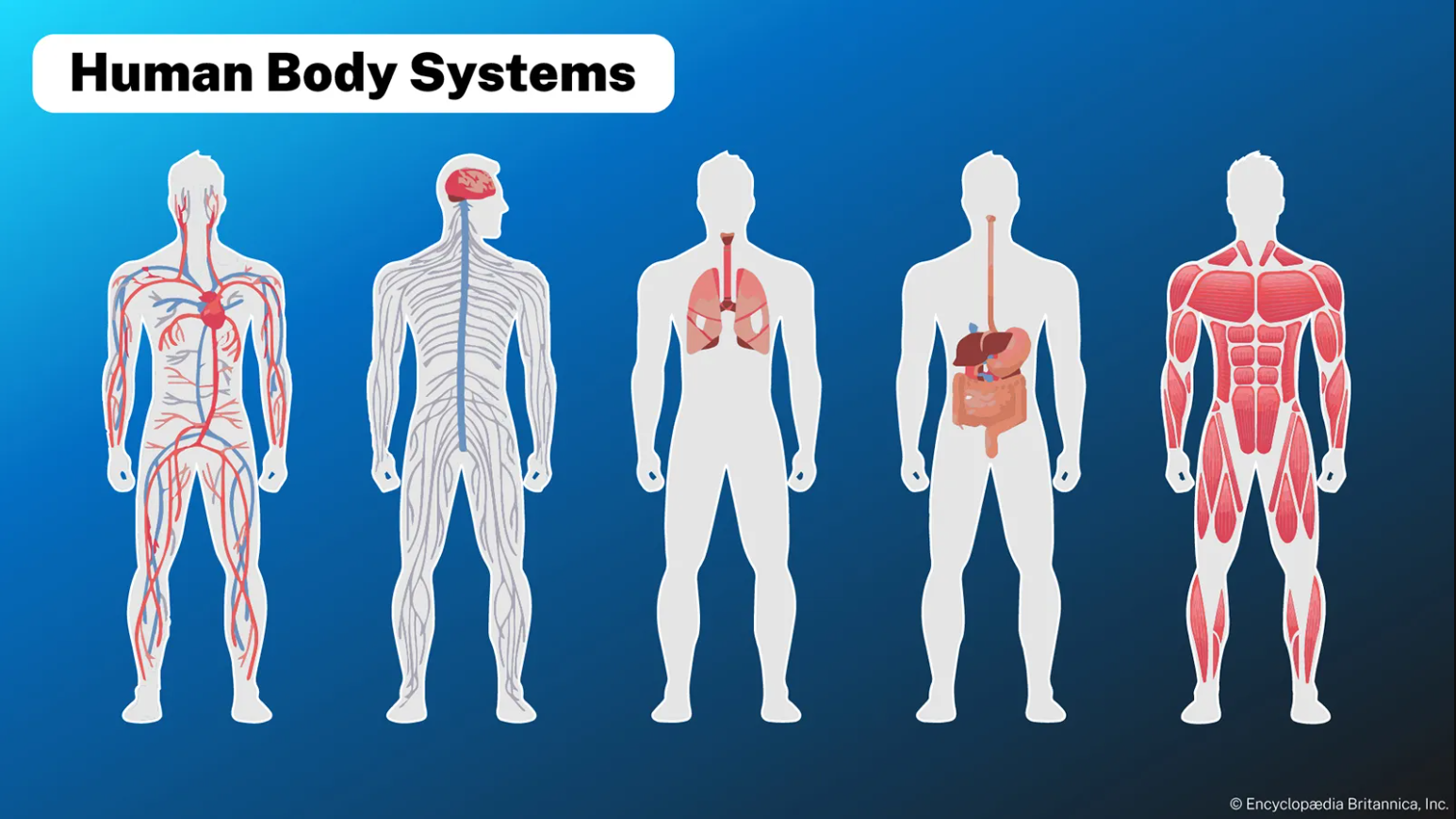
Your body is like a machine; it has different systems that are each responsible for a specific function. Without one of these systems, the body, like a machine, may not run properly and might even shut down. Take a look at each of the systems in the body and explore how they work. You will see how body systems are much like the systems in a car. Just as you need to have a basic understanding of your car in order to keep it in tip-top shape, you need to understand the parts of your body in order to take care of it with proper nutrition and exercise.
The purpose of the body’s circulatory system, or the cardiovascular system, is to carry oxygen, water, and nutrients to each cell in the body and to carry away carbon dioxide and other wastes. It does this by circulating a fluid called blood, which carries the molecules of water, nutrients, and waste. To “circulate” means “to move through a closed system.”
The main organ of the circulatory system is the heart, a muscle that beats a little more than once per second and pumps blood throughout the body. Blood travels through the body through tubes called blood vessels. There are three different kinds of blood vessels:
Arteries carry blood away from the heart.
Veins carry blood back to the heart.
Capillaries are the tiniest blood vessels. Capillaries are where the materials like nutrients and waste are exchanged between the blood and the body’s cells.
The purpose of the respiratory system is to transfer oxygen from the air to the blood and to remove carbon dioxide from the blood. This process is called respiration, and breathing is part of it. Our cells need oxygen to release the energy from food. When they do this, they create carbon dioxide as a waste product. This waste is eliminated by the respiratory system.
The respiratory system consists of several key parts:
The nose and mouth are entry points for air.
The trachea, or windpipe, carries air to the lungs.
The lungs are the main organs where gas exchange takes place.
The bronchi and bronchioles are smaller airways within the lungs.
The alveoli are tiny air sacs where oxygen and carbon dioxide are exchanged with the blood.
The diaphragm is a muscle that helps move air in and out of the lungs.
During inhalation, the diaphragm contracts and pulls downward, creating space for the lungs to expand and fill with air. During exhalation, the diaphragm relaxes and moves upward, pushing air out of the lungs.
The things we eat and drink must be broken down into smaller molecules before our cells can use them for energy, growth, and healing. This process is called digestion. Digestion starts in our mouths when our teeth chew food into a soft pulp. This is called mechanical digestion because the food is physically broken down into smaller pieces, but its chemical composition remains the same. A bit of chemical digestion, or the breakdown of nutrients into smaller molecules by proteins called enzymes, also starts in the mouth.
The chewed-up food then moves through your esophagus into your stomach where more enzymes break it down further, and your body extracts nutrients from the food. What’s leftover after the digestion process moves into your small intestine, then your large intestine, and finally expelled as a waste material called feces.
The digestive system consists of several key parts:
The mouth is where digestion begins with chewing and the action of enzymes in saliva.
The esophagus is a tube that transports food from the mouth to the stomach.
The stomach is where food is mixed with digestive juices and broken down into a liquid mixture.
The small intestine is where most nutrient absorption occurs.
The large intestine absorbs water and forms waste.
The rectum and anus are where waste is expelled from the body.
Digestion involves both mechanical and chemical processes to ensure that nutrients are properly broken down and absorbed into the bloodstream for use by the body.
The nervous system is responsible for the body’s muscle movement, coordination, and control. It is divided into the central nervous system and the peripheral nervous system.
The central nervous system is composed of the brain and the spinal cord. The brain is the major control center. It gives us the power to think, move, write, solve problems, and imagine. It interprets all the information sent to it from outside and inside the body, and it controls our body temperature, heart rate, and breathing. The spinal cord is a bundle of nerve fibers that runs along the back and connects the brain to all of the other nerves in the body.
These nerves that extend throughout the body are called the peripheral nervous system. They transfer messages to and from the brain via the spinal cord.
The nervous system consists of several key parts:
The brain processes and interprets sensory information sent from the spinal cord and controls voluntary and involuntary actions.
The spinal cord transmits messages between the brain and the rest of the body.
Peripheral nerves extend throughout the body and relay information between the body and the central nervous system.
The nervous system enables us to perform complex tasks, respond to our environment, and maintain homeostasis by controlling various body functions.
The muscular system helps the body move and gives it shape. Muscles can be voluntary, such as your skeletal muscle (you consciously control their movement) or involuntary, such as your heart, stomach, and bladder (which you don’t consciously control). Skeletal muscle is the muscle attached to your skeletal system that allows your bones to move up and down.
The skeletal system works with the muscular system to help you move and protect your internal organs. For example, the cranium, or skull, protects the brain, and the ribcage protects the heart and lungs.
Joints are the places where two bones meet. Without joints, we wouldn’t be able to move. Different kinds of joints allow bones to move in different ways. For example, hinge joints, like those in your elbows and knees, allow back and forth movement.
The muscular and skeletal systems consist of several key parts:
Skeletal muscles are attached to bones and enable voluntary movements.
Smooth muscles are found in internal organs and control involuntary movements.
Cardiac muscle is found in the heart and pumps blood throughout the body.
The skull protects the brain, and the ribcage protects the heart and lungs.
Joints connect bones and allow various types of movement.
Together, the muscular and skeletal systems allow for movement, support, and protection of vital organs, enabling us to perform daily activities and maintain overall health.
The excretory system disposes of waste material, like excess liquid and heat energy, from the body. When we talk about the excretory system, we’re usually referring to the urinary system, which gets rid of liquid waste, or urine. The main organs involved in the excretory system are the kidneys. However, the lungs and the skin are also part of the excretory system because they also dispose of bodily wastes.
The respiratory system excretes carbon dioxide, and sweat is excreted through the skin. The process of sweating gets rid of excess heat from the body since the body cools down as the sweat evaporates.
The excretory system consists of several key parts:
The kidneys filter blood to remove waste products and excess substances, forming urine.
The ureters are tubes that carry urine from the kidneys to the bladder.
The bladder stores urine until it is ready to be excreted.
The urethra is the tube through which urine exits the body.
The lungs excrete carbon dioxide, a waste product of respiration.
The skin excretes sweat, which helps regulate body temperature and remove waste.
Together, the excretory system and its associated organs play a crucial role in maintaining the body’s internal environment by removing waste products and regulating bodily functions.
The immune system protects the body against disease-causing organisms like viruses, bacteria, fungi, and parasites. There are different stages of the immune system’s response. First, your skin, the mucus in your respiratory tract, and the acid in your stomach can kill pathogens. If that doesn’t work, your white blood cells swallow and break down invaders. Inflammation or a fever are signs that your immune system is in the midst of a fight against pathogens.
The lymphatic system also plays a huge role in defending the body against germs. Its job is to help keep the level of fluid (called lymph) in the body balanced, as well as to drain it from the body. Lymph nodes filter lymph fluid, and most are found in clusters in the neck, armpit, and groin. When they detect foreign invaders during the filtering process, they manufacture more lymphocytes (a kind of white blood cell), causing the nodes to swell.
The immune and lymphatic systems consist of several key parts:
The skin acts as a physical barrier to pathogens.
Mucus traps pathogens in the respiratory tract.
Stomach acid kills many pathogens that enter the digestive system.
White blood cells (like phagocytes) engulf and destroy pathogens.
Lymph nodes filter lymph and produce lymphocytes to fight infection.
The spleen filters blood and helps fight certain kinds of bacteria.
Bone marrow produces new blood cells, including white blood cells.
Together, the immune and lymphatic systems work to protect the body from infections and maintain overall health by identifying and eliminating harmful pathogens.
1. In humans, the mouth is the first organ responsible for breaking food down into energy in the __________ system.
2. A person with a strong _________ system does not get sick very often.
3. When my grandfather had a heart attack, the doctors told him he had a problem with his __________ system.
4. It is important to drink a lot of water so that your kidneys and the rest of your ____________ system stay healthy.
5. It's important to take days off from lifting weights to give your _______ system time to heal.